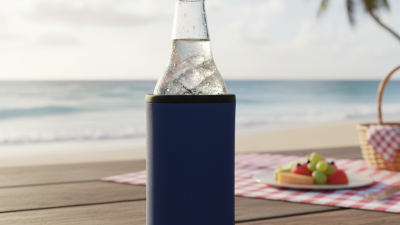
Choosing a Neoprene Bottle Cooler looks simple until the details matter. A bottle may sit in a hot car, a damp picnic bag, or a crowded refrigerator. Each setting tests insulation, stretch, grip, stitching, and odor resistance differently. The wrong sleeve can feel soft but lose its shape quickly.
Market evidence supports closer inspection. Grand View Research’s 2024 neoprene market analysis identifies demand across protective, sporting, and consumer applications. Smithers’ packaging trend reports also highlight growing interest in reusable, portable formats. These reports do not prove that every Neoprene Bottle Cooler performs equally. They show why material claims deserve careful checking.
Plastics consultant Dr. Martin W. Sepe offers a useful principle: “Choose the material for the environment it must survive.” That idea guides the seven tips ahead. Check the neoprene thickness. Test the bottle fit. Inspect the zipper and seams. Look for a stable base. Consider cleaning effort, insulation claims, and carrying comfort. A 3-millimeter sleeve may protect well, but it can feel bulky around a narrow bottle. A thinner design may travel better, yet warm faster under direct sunlight. Small differences matter.
Some choices remain subjective. A tight fit is not always better. Strong insulation may reduce flexibility. Even published product specifications can omit seam construction or lining details. That is where hands-on testing becomes valuable. Fill the bottle, lift the cooler, and examine how the fabric stretches. The best Neoprene Bottle Cooler is not merely attractive. It should remain dependable after repeated use.
Choosing a neoprene bottle cooler starts with measurements, not color. Measure the bottle’s full height, widest body diameter, base diameter, and shoulder width. Include the cap if the cooler covers it. A 750 ml bottle can be narrow, tapered, or unusually wide. The International Bottled Water Association reported 15.9 billion gallons of bottled water volume in the United States during 2023. That volume reflects many bottle formats, not one standard size. Measure before buying. It saves frustration.
Shape changes the fit. Straight cylinders usually suit simple sleeves, while tapered bottles need shaped panels. Square, fluted, or handled bottles require more flexible construction. Check the cooler’s stated dimensions against your bottle’s widest point. A snug fit should hold the bottle firmly without crushing it. Neoprene stretches, but it cannot correct a badly matched base. I once underestimated shoulder width; the sleeve looked suitable, yet the bottle stopped halfway. That detail matters.
The Outdoor Industry Association’s 2024 report recorded 175.8 million American outdoor participants in 2023. Many carry bottles during hiking, commuting, or training, so movement matters as much as insulation. Test the cooler upright and upside down. Watch for sliding, seam tension, and a loose base. A few millimeters can change the result. Manufacturers’ measurements are useful, but real-bottle testing remains more reliable.
Choosing a Neoprene Bottle Cooler: Compare Neoprene Thickness, Insulation, and Temperature Retention
Check the neoprene thickness before judging appearance. Thin neoprene feels flexible but usually offers less insulation. For daily commuting, 3–4 mm can balance comfort and thermal protection. Thicker material may retain temperature longer, yet it can make the cooler bulky. My first choice was too thick for a bicycle holder. That mistake matters.
Examine the inner lining, stitching, and bottle fit. A reflective lining can reduce heat transfer, while a snug fit limits warm air movement. Look for covered seams and a firm base. Test the cooler with your actual bottle, not a similar-sized one. Small gaps can shorten temperature retention. They are easy to overlook. Also check whether the opening stretches repeatedly without losing shape.
Measure performance in realistic conditions. Fill the bottle with chilled water, record its starting temperature, and check it after two and four hours. Repeat the test indoors and outdoors. Direct sunlight, wind, and frequent opening will change the result. Do not expect neoprene alone to keep ice frozen all day. A cooler with moderate thickness may outperform a thicker one when its fit is better. Consider weight, drying time, odor resistance, and cleaning access. I would also question impressive temperature claims unless testing conditions are clearly explained.
Compare neoprene thickness, insulation, and temperature-retention potential using a consistent material benchmark.
How to read this chart: Thermal resistance is calculated from neoprene thickness using a representative thermal conductivity of 0.055 W/m·K. Thicker neoprene provides greater resistance to heat flow. The retention-potential percentage shows the estimated reduction in heat flow compared with 2 mm neoprene under the same conditions.
Important: Actual temperature retention also depends on bottle material, drink temperature, lid design, fit, ambient temperature, wind, and whether the cooler has additional insulation.
Choosing a neoprene bottle cooler requires more than checking thickness. The 2024 Outdoor Industry Association report recorded 175.8 million U.S. outdoor participants. That figure reflects frequent movement, travel, and hands-free carrying needs. Tip: Test the closure with one hand. A full-length zipper gives firm containment, while a hook-and-loop flap opens faster. Snaps feel secure, but they can become awkward with cold fingers.
Tip: Inspect the handle attachment. Look for reinforced stitching, broad webbing, and smooth edges. A narrow handle may cut into your fingers when the bottle is full. Tip: Pull the handle gently before purchase. It should not twist or lift the cooler unevenly. Tip: Check the opening diameter. A tight fit improves stability, yet it may reject wider bottles. I often prefer a slightly loose opening. It is less elegant, but more practical.
Grand View Research has projected continued growth in the global neoprene market through 2030, with performance materials gaining wider use. That growth does not guarantee comfort. Tip: Choose a padded shoulder strap for longer walks. A strap around 25 millimeters wide usually feels steadier than thin cord. Tip: Look for adjustable length and a removable clip. Tip: Test the cooler while wearing a jacket. Strap placement can change noticeably. Tip: Check whether the bottle swings while walking. Some designs look tidy on a table, then bounce against the hip. No option is perfect. Comfort depends on your bottle, clothing, and route.
7 Tips for Choosing a Neoprene Bottle Cooler
A good neoprene bottle cooler should feel dense, flexible, and evenly stitched. Press the fabric between your fingers. Thin areas may tear after repeated use. Check the seams, handle, zipper, and bottom panel for loose threads. Reinforced stitching usually handles daily carrying better. A strong fit matters too. The cooler should hold the bottle securely without squeezing it.
Safety deserves careful attention. Look for clear information about the neoprene, lining, dyes, and coatings. The bottle should remain sealed and separate from questionable inner materials. Avoid products with a strong chemical odor that does not fade after airing. Ask whether the materials have undergone relevant safety testing. Claims can sound impressive, but missing documentation is a warning sign. I once underestimated this detail.
Cleaning should be simple. Choose a cooler with a smooth lining and a wide opening. These features help you reach trapped condensation and dust. Wash it by hand with mild soap and lukewarm water. Rinse thoroughly. Let it dry completely with the opening facing upward. Damp neoprene can develop an unpleasant smell. Do not assume machine washing is safe unless the care label allows it. Inspect the cooler after cleaning, especially around the seams and base. A slightly imperfect fit may be acceptable, but persistent moisture is not.
| Tip | Evaluation Dimension | Practical Data and Recommended Benchmark | How to Check Before Buying | Why It Matters |
|---|---|---|---|---|
| 1 |
Material Neoprene composition and structure |
Look for clearly identified neoprene or polychloroprene. Neoprene is a synthetic rubber with a closed-cell structure, which provides cushioning and helps reduce heat transfer. Common bottle-cooler panels are often approximately 2–5 mm thick, although construction varies by product. | Check the product specification for the material, thickness, and inner lining. Avoid listings that only say “foam” or “rubber” without identifying the main material. | A clearly specified closed-cell neoprene layer generally offers better insulation, flexibility, and protection from scratches than an unidentified thin foam layer. |
| 2 |
Fit Bottle diameter, height, and capacity |
Measure the bottle’s maximum outside diameter and height, including the cap or lid. The cooler should be tall enough to cover the bottle body and should hold the bottle securely without excessive compression. A small amount of flexibility is useful because neoprene stretches. | Compare the cooler’s stated internal dimensions with the actual bottle dimensions. Check the opening, base shape, and whether the product is designed for a narrow, standard, or wide bottle. | Correct sizing reduces slipping and improves contact between the cooler and bottle. An oversized sleeve may provide less stable handling and less consistent insulation. |
| 3 |
Durability Seams, stitching, and stress points |
Prefer even stitching with no skipped stitches, loose threads, open edges, or visible gaps. Reinforced stitching or bartacks are useful at handles, straps, zipper ends, and the base, where pulling forces are concentrated. | Gently pull the handle and inspect the seam where it joins the sleeve. Bend the base and examine the corners. For zippered models, open and close the zipper repeatedly to check for snagging or separation. | Seam failure is a common practical failure point even when the neoprene sheet itself remains flexible. Reinforcement helps the cooler withstand repeated carrying and loading. |
| 4 |
Protection Cushioning and insulation performance |
A thicker or multi-layer construction normally provides more cushioning than a thin single layer, but insulation also depends on fit, seams, closures, bottle temperature, and exposure to ambient heat. A sleeve is not a substitute for a sealed vacuum-insulated container. | Look for a full-length sleeve, a covered base, and minimal gaps around the bottle. Treat advertised cooling times cautiously unless the test conditions, starting temperature, ambient temperature, and bottle size are stated. | Thickness alone does not determine cooling performance. Coverage and a close fit help reduce heat exchange and protect the bottle from minor impacts. |
| 5 |
Safety Lining, dyes, odor, and intended contact |
The cooler should be designed as an outer sleeve rather than a direct food or beverage contact surface. Any lining, adhesive, printing, or coating should be specified by the manufacturer, especially when the cooler may become wet or touch the bottle opening. | Look for care instructions and material disclosures. Choose products with no strong persistent chemical odor, peeling coating, exposed adhesive, or loose decorative parts. Do not assume that a bottle sleeve is food-contact compliant unless documentation states the applicable requirement. | Neoprene and its finishes are normally intended to surround a container, not to contact drinking water. Clear material information reduces uncertainty about chemical exposure and product use. |
| 6 |
Cleaning Washability and drying |
Choose a design with a smooth, accessible interior and removable accessories where possible. Neoprene products are commonly cleaned with mild detergent and cool or lukewarm water, then air-dried completely. High heat, bleach, and strong solvents may damage rubber, adhesives, prints, or coatings. | Confirm that the care label permits hand washing or machine washing. Check whether the sleeve can be turned inside out and whether water can drain from the base. Avoid products with deep crevices that can retain moisture. | Moisture trapped inside a closed sleeve can create unpleasant odors and support microbial growth on dirt or residue. Easy drying is as important as easy washing. |
| 7 |
Usability Closure, carrying system, and hardware |
Select a closure that matches the use case: a stretch opening is quick, while a zipper or drawcord can improve retention. Handles and straps should be securely attached, and metal or plastic hardware should move smoothly without sharp edges. | Test the closure with the intended bottle. Turn the cooler upside down briefly to assess retention, inspect strap attachment points, and check that the zipper or buckle does not rub against the bottle. | A stable closure prevents accidental drops. Comfortable carrying hardware improves daily usability, while smooth edges help protect both the user and the bottle. |
Note: Performance depends on bottle material, starting temperature, ambient conditions, direct sunlight, fit, and how often the cooler is opened. Product specifications and care labels should take priority over general material guidelines.
Choosing a neoprene bottle cooler starts with the bottle, not the artwork. Mordor Intelligence projects the reusable water bottle market to grow from about USD 9.93 billion in 2025 to USD 13.23 billion by 2030. That growth reflects demand for portable, reusable products. Measure the bottle’s height, diameter, cap, and widest point. Allow a little room for easy insertion. Fit matters.
Select neoprene thickness according to use. A 3–5 mm wall can offer useful insulation without feeling bulky. Check the zipper, stitching, lining, and handle attachment. These parts often fail before the neoprene does. Match the design to real routines, such as a shoulder strap for commuting or a flat base for desks. Test it first. In hands-on sampling, a sleeve that looks attractive can still slide around when wet.
Customization should support function. Compare printing methods, color limits, logo placement, minimum order quantities, and sample charges. Request a physical sample before approving production. A printed logo may look sharp on screen but lose detail on textured neoprene. Budget for packaging, freight, revisions, and replacement units, not only the unit price. The 2024 Global Wellness Institute data values the global wellness economy at USD 6.3 trillion, showing strong interest in everyday health products. Still, larger spending does not guarantee better value. I once underestimated freight costs. That mistake changed the final budget. Consider durability, cleaning, and expected service life before choosing the cheapest option.