Leave Your Message
Request a Quote

China Top 10 Neoprene Boots Manufacturers for Global Buyers

Choosing reliable Neoprene Boots manufacturers requires more than comparing prices or catalog photos. Global buyers must examine material quality, construction methods, factory experience, and export consistency. A boot may look sturdy online, yet its seams can separate after repeated exposure to cold water, mud, or sharp gravel.

Materials specialist Dr. Susan E. M. Selwyn explains, “Neoprene performance depends on thickness, density, flexibility, and how carefully the material is joined.” Her observation is practical. Good Neoprene Boots should feel flexible around the ankle, firm beneath the foot, and evenly finished at every seam. Buyers should request technical specifications, sample pairs, inspection records, and clear production details before placing large orders. Small details matter.

This guide reviews China’s top ten Neoprene Boots manufacturers for international buyers. It considers factory capabilities, customization options, quality controls, production capacity, and communication reliability. Some suppliers may excel at fishing boots, while others focus on diving, farming, hunting, or industrial applications. The right choice depends on the working environment.

There is no perfect shortlist.

A manufacturer with impressive machinery may still provide slow after-sales support. Another supplier may offer excellent craftsmanship but limited capacity during peak seasons. Buyers should therefore compare evidence, not promises. Factory audits, material testing, realistic samples, and transparent quotations can reduce avoidable risks. This evaluation is not a final verdict. It is a practical starting point for finding dependable partners in the Neoprene Boots industry.
China Top 10 Neoprene Boots Manufacturers for Global Buyers

Neoprene Boots: Materials, Features, and Common Applications

Neoprene boots use closed-cell chloroprene rubber foam, valued for warmth, flexibility, and water resistance. The material traps air, helping reduce heat loss in cold water and wet ground. It also cushions the foot against rocks, mud, and uneven surfaces. However, neoprene is not automatically waterproof. Seams, zippers, and poorly sealed openings can still allow water inside. That detail is often overlooked.

Grand View Research estimates the global neoprene market reached about USD 2.1 billion in 2023. Its report also projects steady growth through 2030, supported by outdoor recreation, protective equipment, and industrial demand. A separate Fortune Business Insights assessment indicates continuing expansion in the global rubber boots market. These figures suggest wider demand, but they do not guarantee equal product quality. Material thickness, commonly ranging from 3 to 7 millimeters, affects warmth, weight, and flexibility. Thicker boots insulate better. They can feel restrictive.

Common applications include fishing, duck hunting, kayaking, shoreline work, agriculture, and cold-storage operations. Fishing boots often require reinforced toes and aggressive outsoles for slippery banks. Diving models need closer ankle seals and controlled flexibility. Industrial users may prioritize chemical resistance, puncture protection, and certified slip performance. Buyers should inspect seam construction, outsole compounds, lining comfort, and test documentation. A warm boot can still fail on wet concrete. That assumption deserves scrutiny.
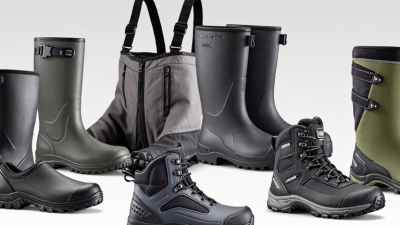
How to Evaluate Neoprene Boot Manufacturers for Global Sourcing

Selecting among the China top 10 neoprene boots manufacturers requires more than comparing prices. Start with material evidence. Ask for neoprene thickness records, density results, seam-strength tests, and outsole abrasion data. Allied Market Research valued the global neoprene market at about USD 1.7 billion in 2021, with continued growth expected through 2031. This expansion attracts capable factories, but also inexperienced suppliers.

Audit production, not only samples. A factory should explain cutting tolerances, adhesive curing time, mold maintenance, and inspection frequency. Check whether the same process is repeated across large batches. ISO’s 2022 survey recorded more than 1.2 million ISO 9001 certificates worldwide. However, certification does not guarantee comfortable boots or stable sizing. A certificate can be real and still insufficient.

Request recent audit reports, corrective-action records, and batch traceability. Visit the factory when possible. Photos can hide weak details.

Tips: Test three sizes from separate batches. Measure foot length, shaft height, and inner circumference. Wear them for thirty minutes on wet and uneven surfaces. Record pressure points, leakage, odor, and sole grip. Ask for REACH-related material declarations when selling into Europe, and confirm laboratory methods in writing. Do not accept “waterproof” as a complete claim. Define the test pressure and duration. Small suppliers may respond faster, yet their backup capacity can be limited. Large suppliers look safer, though communication may become slower. That trade-off deserves honest scoring.

China’s Top 10 Neoprene Boots Manufacturers and Their Specialties

China’s leading neoprene boot manufacturers serve different needs rather than making one universal design. Some focus on molded, waterproof boots for farm work, while others build flexible waders for fishing. Hunting-oriented factories may prioritize quiet outer fabrics and muted colors. Cold-weather specialists add thicker neoprene and insulated linings. These choices affect weight, warmth, and movement.

Other manufacturers concentrate on reinforced toe caps, slip-resistant soles, lightweight travel boots, or children’s sizing. A few offer custom patterns and private-label production. Others are better equipped for larger, repeat orders than small trial runs. Details matter. Ask about neoprene thickness, seam construction, sole compounds, and size grading; a product photograph cannot confirm these reliably. Request samples when practical.

For global buyers, compare the factory’s specialty with the conditions where the boots will be used. A thick hunting boot may feel cumbersome during long walks, while a light design may not suit prolonged cold exposure. This is easy to overlook. Review sample fit and workmanship, and confirm production tolerances before placing a large order. Even established processes can produce variation, so clear specifications and inspection plans remain useful.

Typical Neoprene Boot Thickness by Use

Common thickness options used for different water-temperature and insulation needs

Neoprene boots commonly use 3 mm, 5 mm, or 7 mm material. Thicker neoprene generally provides more insulation, while the best choice depends on water temperature, activity, and fit. These are typical product options, not market-share figures.

Quality Control, Certifications, and Production Capabilities

For global buyers, neoprene boot quality starts with repeatable material checks. Ask how suppliers verify sheet thickness, density, stretch, and bonding strength. A simple sample inspection can reveal uneven seams, trapped adhesive, or rough edges around the ankle. Small details matter. Request records from multiple production batches, not only a polished pre-production sample. Even a capable factory can have a weak batch.

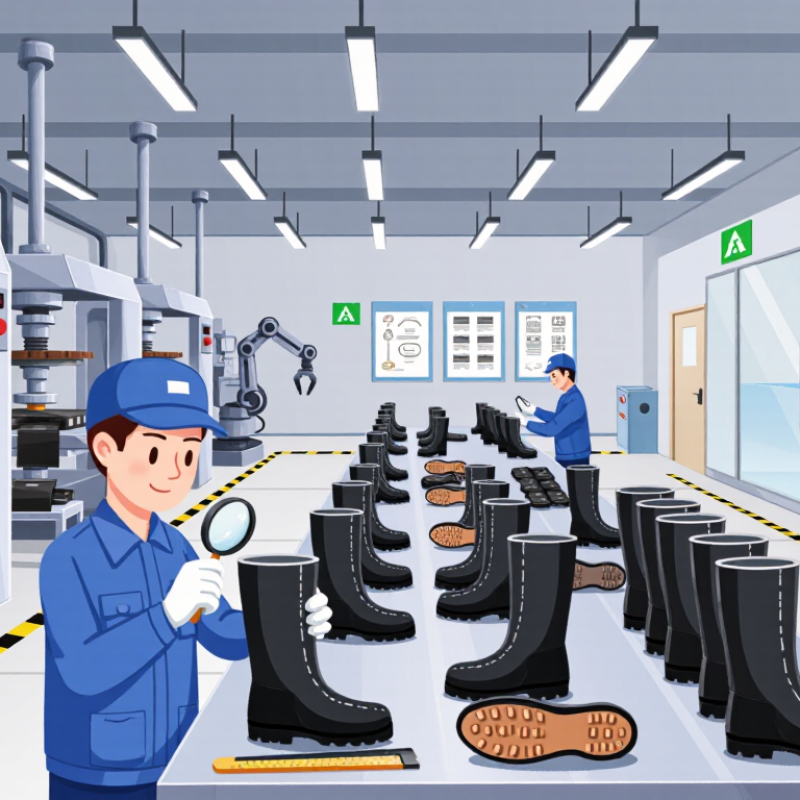
Production controls should cover cutting, stitching, gluing, curing, and final inspection. Buyers can ask for documented defect limits and clear procedures for handling failed checks. Practical tests may include flexing, water resistance, sole adhesion, and wear simulation. Test methods should match the intended use. A boot for cold-water work faces different demands from one designed for occasional outdoor wear. Not every test predicts field performance.

Certifications can support confidence, but their scope matters. Confirm that documents are current, issued to the correct manufacturing site, and relevant to the product or management system being discussed. Independent laboratory reports add useful evidence when specifications are clearly stated. Ask manufacturers about monthly capacity, tooling, sample timelines, and peak-season lead times. Then compare those claims with production records and a factory audit where feasible. A certificate alone cannot prove consistent output, and buyers should allow time to verify details.

China Top 10 Neoprene Boots Manufacturers for Global Buyers – Quality Control, Certifications, and Production Capabilities

Buyer evaluation matrix: the anonymous profiles below are comparison categories, not verified or ranked companies. Manufacturer-specific capacity, certifications, and test results should be confirmed directly with current documents and independent inspections.

Profile Product Focus Production Capability to Verify Key Quality-Control Checks Relevant Compliance Evidence Buyer Due-Diligence Request
Supplier Profile 01 General-purpose neoprene wellington boots Confirm molding method, available sizes, color options, monthly output, and order minimums. Check size consistency, sole bonding, surface finish, and leakage on finished samples. Request current quality-management certificates if claimed; confirm issuing body, validity, and covered site. Obtain a product specification, inspection plan, and pre-shipment inspection report.
Supplier Profile 02 Cold-weather and insulated boots Verify insulation options, lining construction, temperature-performance claims, and production lead times. Assess lining attachment, insulation uniformity, flexibility after cold conditioning, and water resistance. Request test methods and reports supporting any thermal or cold-weather performance claims. Ask for test conditions, sample details, and the laboratory’s accreditation scope where applicable.
Supplier Profile 03 Agricultural and outdoor work boots Confirm outsole choices, tread patterns, size range, and ability to manage seasonal orders. Inspect tread formation, outsole attachment, dimensional tolerances, and resistance to cracking or separation. If sold as protective footwear, request evidence against the applicable destination-market footwear requirements. Clarify whether claims such as slip resistance or puncture resistance are tested for the exact model.
Supplier Profile 04 Fishing, boating, and wet-environment boots Check options for boot height, lining, surface texture, and matching wader or apparel production if needed. Test for water ingress, seam integrity, sole bonding, and material consistency across production lots. Request substantiation for waterproof claims; verify chemical-compliance documentation for the destination market. Ask for a documented leak-test procedure and acceptance criteria used for bulk production.
Supplier Profile 05 Hunting and recreational boots Verify camouflage or custom-print capability, color matching, packaging options, and tooling ownership terms. Check print alignment, color consistency, surface adhesion, fit, and finished-pair matching. Request material declarations and applicable restricted-substance test reports; REACH is a regulation, not a product certification. Confirm artwork approval, color tolerances, and procedures for handling nonconforming goods.
Supplier Profile 06 Children’s neoprene boots Confirm children’s size grading, small-size tooling, labeling support, and age-related product requirements. Inspect small-size fit, component security, sharp edges, material odor, and labeling accuracy. Identify applicable children’s-product and chemical requirements for the importing country; request model-specific reports. Require a compliance matrix listing each market, applicable rule, tested component, and report date.
Supplier Profile 07 Industrial or occupational footwear Verify capability to produce the specific protective construction and manage model-by-model conformity documentation. Check protective components, sole construction, fit, and production traceability against the approved design. For applicable safety footwear, verify conformity to the relevant market standard, such as EN ISO 20345 in markets where it applies. Match certificates and test reports to the exact model, protective features, and production location.
Supplier Profile 08 Private-label and customized designs Assess sampling process, mold development, customization limits, and repeat-order controls. Compare approved samples with bulk goods for dimensions, materials, colors, and construction details. Request evidence that compliance testing covers the final customized materials and construction. Document approved reference samples, change-control approval, and ownership of customer-specific tooling.
Supplier Profile 09 Premium-fit and comfort-focused boots Verify fit-development process, available lasts, size grading, and ability to maintain specifications between runs. Review fit samples, dimensional measurements, lining comfort, flex points, and consistency between sizes. Request substantiation for performance claims and the applicable material-compliance documents. Run wear trials across representative sizes and record fit feedback before approving bulk production.
Supplier Profile 10 High-volume standard models for export Request verified monthly capacity, peak-season planning, subcontracting details, and delivery performance records. Review incoming-material inspection, in-process checks, final inspection records, and batch traceability. Validate current certificates and test reports directly with the issuer or accredited laboratory where possible. Conduct a factory audit and agree on written quality limits, inspection sampling, and corrective-action timelines.

Note: ISO 9001 relates to a quality-management system and does not certify a specific boot’s performance. Standards and regulatory requirements depend on the product claims and destination market; verify current requirements before placing an order.

Export Services, Pricing Factors, and Buyer Selection Criteria

China Top 10 Neoprene Boots Manufacturers for Global Buyers

Export service often separates a workable supplier from a difficult one. Experienced manufacturers should provide samples, size charts, packing details, and clear commercial invoices. They should also explain lead times, minimum order quantities, and shipping terms without vague promises. Ask for pre-shipment inspection photos and batch traceability. Small details matter.

Pricing depends on neoprene thickness, rubber density, lining, sole design, stitching, and waterproof seam treatment. Custom colors, molds, logos, and special packaging may add separate costs. Freight changes with carton size and destination. A low quote can hide weak materials or delayed production. I once treated unit price as the main measure. That was a mistake.

Use a written comparison sheet for the ten shortlisted manufacturers. Check factory capacity, export experience, quality-control procedures, and response speed. Request recent test records for flexibility, bonding strength, and water resistance. Confirm whether the supplier manages customs documents and replacement claims. Payment terms should match verified production milestones. Samples help, but one sample cannot prove stable mass production. Allow time for a second inspection. That extra step feels slow. It can prevent costly surprises.